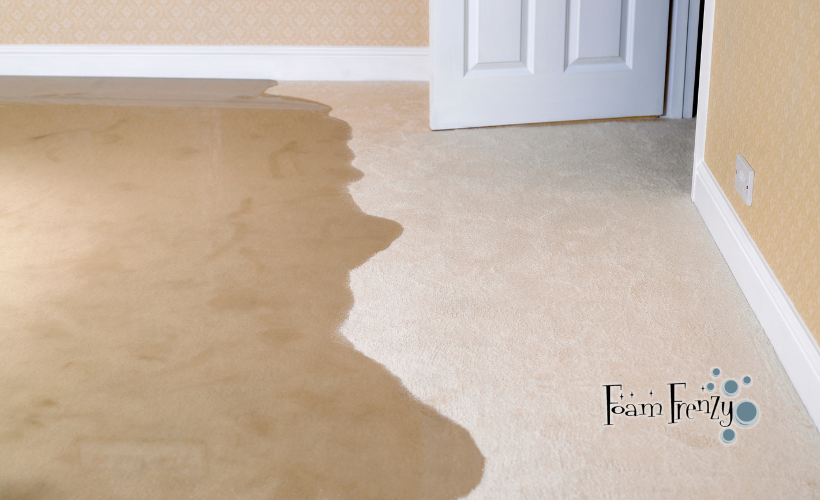
A flooded basement turns into a water emergency fast. The longer your carpet sits in standing water, the harder it becomes to save. Carpet cleaning for a flooded basement is safe when you act within hours, identify the water source, and follow the right cleanup steps. Foam Frenzy helps Windsor and Essex County homeowners figure out when flooded carpet can be cleaned and when it must be replaced. This guide covers safety precautions, water extraction, drying methods, mold prevention, and the warning signs that tell you whether your carpet needs professional cleaning or removal.
Know What Type of Water Flooded Your Basement
The water source matters more than most homeowners realize. The type of water sitting in your carpet decides whether professional cleaning can save it or whether the carpet goes straight to the curb. Heavy rainfall, burst pipes, sewer backup, and appliance malfunctions each carry different levels of risk.
Clean Water
A burst pipe, broken water heater, or supply line failure releases clean water. This type carries the lowest risk. If you extract the water within 24 to 48 hours, the carpet and subfloor can usually be saved. Clean water does not contain bacteria or sewage, so thorough drying and standard cleaning are enough to restore the carpet.
Locate your water shutoff valve and stop the flow before anything else. Cutting the water source prevents further saturation and gives you a head start on drying.
Gray Water
Gray water flows from washing machines, dishwashers, and sump pump failures. It contains mild contaminants such as soap residue, food particles, and dirt. Gray water floods need full disinfection after extraction. The carpet padding almost always needs replacement because it absorbs contaminated water and holds it against the subfloor like a sponge.
Black Water
A sewer backup from backed-up toilets, storm drains, or river flooding produces black water. Sewage back up events push raw sewage, bacteria, viruses, and chemical contaminants into your basement. Carpet exposed to black water must be removed and thrown away. No cleaning method makes carpet soaked in raw sewage safe for your family. The subfloor also needs professional flood remediation and full sanitization before any new flooring goes down.
Stay Safe Before You Start Cleanup
Basement flood cleanup puts your health at risk if you skip basic safety steps. Protect yourself and your family before touching anything.
- Turn off the power at the breaker panel before stepping into standing water — electrical shock is a serious threat when water reaches outlets or exposed wiring
- Wear protective gear such as rubber boots, waterproof gloves, and a respirator mask
- Clear the room by moving all furniture and belongings out of the wet area
- Stop the water source by using your water shutoff valve or calling a plumber
- Document the damage with photos and video before you move anything — your insurance company needs this to process your claim
Do not enter a flooded basement until you confirm the electricity is off. Standing water and live current create a life-threatening situation. If you cannot reach the breaker panel safely, call your utility provider before going any further.
How to Clean Carpet After a Basement Flood
Time works against you during flooded carpet cleanup. Mold begins growing within 24 to 48 hours in damp conditions. Every hour you wait raises the risk of permanent damage and increases the cost of water damage restoration.
Extract Standing Water Right Away
Use a wet/dry vacuum or submersible pump to pull standing water out of the carpet as fast as possible. Standard household vacuums cannot handle flood water and will burn out. Wet/dry vacuums remove water from carpet fibers effectively, while submersible pumps handle deeper flooding across the basement floor.
Remove the Carpet Padding
Carpet padding traps water between the carpet backing and the subfloor. Waterlogged padding cannot be dried or sanitized well enough to reuse. Pull the carpet back, cut the padding out, and bag it in heavy-duty garbage bags. Replacing padding is cheap compared to the mold removal costs you will face if wet padding stays in place.
Dry the Carpet and Subfloor Completely
Thorough drying is the most critical step in preventing mold and structural damage. Position air movers and commercial-grade dehumidifiers throughout the basement. Prop the carpet up over chairs or boxes so air circulates on both sides. Open windows when weather permits to increase airflow. Expect the drying process to take 3 to 5 days depending on carpet thickness and basement humidity.
Once everything feels dry, run moisture tests on the carpet, subfloor, and surrounding walls. A moisture meter reveals hidden dampness that you cannot see or feel. Skipping moisture tests is one of the most common mistakes homeowners make during water restoration. Trapped moisture causes mold growth weeks after the visible water disappears.
Sanitize and Remove Odors
After the carpet passes moisture tests, it needs professional-level cleaning. A professional carpet cleaner eliminates bacteria, allergens, and odor-causing compounds that remain trapped deep in carpet fibers after a flood.
Foam Frenzy uses Green Seal certified, eco-friendly products that destroy bacteria without leaving harsh chemical residues behind. Our dry foam method cleans deep into carpet fibers without pushing more water into the material. This matters because flood-damaged carpet does not need additional moisture. Traditional steam cleaning forces hot water into the carpet and slows the drying process. Dry foam lifts contaminants to the surface for extraction without excess saturation.
For odor control, sprinkle baking soda across the carpet and let it sit for several hours before vacuuming. This absorbs lingering smells and preps the carpet for professional cleaning.
Health Risks of Keeping Wet Carpet Too Long
Carpet that stays wet beyond 48 hours becomes a health hazard. Mold spores thrive in damp, dark spaces, and a flooded basement provides ideal growing conditions.
Mold exposure triggers respiratory problems, allergic reactions, headaches, and skin irritation. Children, elderly family members, and people with asthma face the highest risks. Contaminated water left in carpet also breeds bacteria and dust mites that lower indoor air quality throughout your entire home.
A carpet that smells musty after drying likely has mold growing in its fibers or backing. That carpet may need replacement even if it looks clean on the surface.
When You Should Replace the Carpet Instead
Professional cleaning saves most carpets after clean water and gray water floods. However, replacement is the only safe option in these cases:
- Sewer backup or black water exposure — carpet soaked in raw sewage cannot be cleaned to a safe level
- Wet for more than 48 hours — prolonged moisture creates a high chance of mold throughout the fibers and backing
- Strong musty odor that persists after professional cleaning signals hidden mold in the subfloor
- Visible mold growth on the carpet surface, backing, or subfloor beneath
- Delamination where the carpet backing separates from the fibers due to extended water exposure
Contact your insurance company about coverage for carpet replacement after water damage restoration events. Many homeowner policies cover flood-related carpet replacement when you provide proper documentation.
Why Professional Cleaning Outperforms DIY After a Flood
DIY cleanup removes surface water, but it rarely eliminates the bacteria, allergens, and contaminants buried deep in carpet fibers. Professional water restoration equipment delivers stronger extraction power and deeper sanitization than consumer-grade or rental machines.
Foam Frenzy provides a real advantage for flood-damaged carpets. Our eco-friendly dry foam method scrubs deep into fibers without adding more water to an already vulnerable carpet. Our Green Seal and EcoLogo certified products stay safe for kids and pets, making them the right choice for families recovering from a water emergency. Foam Frenzy serves homeowners across Windsor, Tecumseh, LaSalle, Leamington, Amherstburg, Kingsville, Essex, Harrow, and Lakeshore.
Get Your Basement Carpet Cleaned the Right Way
A basement flood does not mean your carpet is gone for good. Carpet cleaning for a flooded basement saves money and cuts stress when you handle it quickly and correctly.

Foam Frenzy brings professional-grade, eco-friendly cleaning to your door and helps Windsor and Essex County families recover from water damage with confidence. Call us today at (519) 919-3313 to schedule your post-flood carpet cleaning and get your basement looking and smelling fresh again.